What Is Dropshipping & How Does It Work in 2026?
Starting an online store used to mean buying inventory upfront and hoping it sold before the bills piled up. Dropshipping literally cuts that risk out of the equation. You sell the product first, then it gets packed and shipped by someone else.
In 2026, with buyer expectations around speed higher than ever and with various tools speeding up how sellers research products, it's worth revisiting what the model actually involves, how it works, and whether it still makes sense to start one.
What Is Dropshipping?
Dropshipping is a way of running an online store where you never physically hold the products you sell. Rather than buying stock and storing it yourself, you partner up with a supplier, usually a manufacturer or wholesaler, who keeps the inventory ready. When someone buys from your store, you pass the order onto the supplier, and they pack and ship it straight to the customer's door.
Throughout this process, you remain the face of the transaction the whole time. It's your name that goes on the invoice, and it's your branding that shows up on the packaging. If something goes wrong, it's usually you the customers contact. The supplier stays in the background, doing all the physical work while you handle pricing, listings, and marketing.
The appeal of dropshipping is straightforward: you don't need a warehouse, for which you have to pay the lease, and you don't need to pre-buy stock, about which you're unsure whether it sells or not.
Your profit comes from the gap between what the customer pays you and what the supplier charges you for the item.
How Does Dropshipping Work?

Every dropshipping order follows roughly the same path, whether you're running a general store or a niche one built around a specific product category.
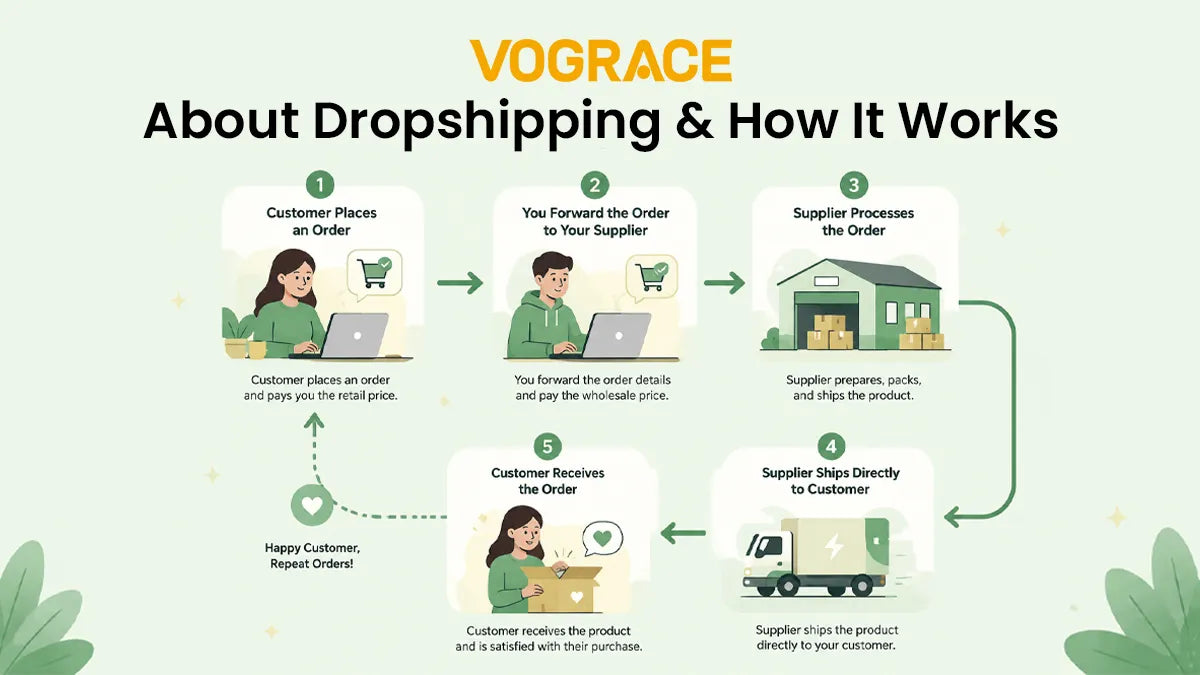
The process runs on three parties staying in sync:
You (Your Store) -> Your Supplier -> Customer.
Here's what that looks like broken into steps.
1. Choose a Product and Supplier
Before anything else, you need something worth selling and someone reliable to supply it. That means comparing suppliers, checking shipping times and pricing, and also ordering a sample before you commit to a product you've never held.
2. Add the Product to Your Online Store
Once you've finalized a product, you build out a listing with photos, a description, and a retail price that covers what you will pay the supplier plus your margin. Many sellers pull product data straight from the supplier's catalog, then maybe rewrite the copy so it doesn't read like a dozen other stores carrying the same item.
3. A Customer Buys the Product
A shopper finds your store, adds the item to their cart, and checks out. They pay you the retail price directly. At this point you haven't paid the supplier anything yet.
4. Send the Order to the Supplier
You pass the order details, including the customer's shipping address, over to your supplier and pay them the wholesale cost of the item. In today's time, this step is completely automated thanks to different software and platforms that sync a storefront with the supplier's system.
5. The Supplier Fulfills the Order
The supplier locates the item, packages it, and prepares it for shipment. Some suppliers offer neutral or branded packaging so the delivery looks like it came directly from your store rather than a third party.
6. The Product Reaches the Customer
The package ships to the customer, and tracking information usually gets passed back to you so you can keep the buyer updated.
From here, any questions about delivery, damage, or even quality land directly in your inbox, not the supplier's. And rightfully so, you must take full responsibility for customer satisfaction.
What Are the Pros and Cons of Dropshipping?
Dropshipping isn't a magical process that only has advantages; it trades one kind of risk for another. Compared to a traditional storefront, it's genuinely easy to start, but the same ease of entry means more competitors selling the same exact product and less control once an order leaves the warehouse.
Advantages of Dropshipping
The main advantage is how little it costs to get going. There's no upfront inventory purchase, no warehouse lease, and no risk of getting stuck with products nobody wants.
You can also test new items quickly, adding or dropping them from your catalog without eating a loss since you never bought the stock to begin with.
Since there's no physical operation to manage, the whole business can run from a laptop or even a mobile phone anywhere with internet access, and expanding your catalog is just a few clicks away.
Disadvantages of Dropshipping
Margins tend to be thin, mainly because the barrier to entry is so low that popular products end up listed by dozens of competing stores, all driving prices down.
You also give up a lot of control over the customer experience. If a supplier ships late, packs poorly, or sends the wrong size, the customer blames your store, not a supplier they don't know exists.
Shipping times can run longer than shoppers expect, especially with suppliers based overseas, and returns get messy when the product never passed through your hands to inspect.
There's also the risk of a supplier selling out of an item that's still showing as available on your site, which means canceling orders after a customer has already paid, which gives you a bad rep.
How to Start Dropshipping in 2026

Setting up a store doesn't take long once the groundwork is done, but skipping the early research is where most new stores run into trouble a few months in.
Finding a supplier comes after finding a product, yes. But if you notice, almost all disadvantages of dropshipping come from the supplier. That's why finding a reliable dropshipping site can help you avoid many of these issues and make running your store much easier.
1. Pick a Niche
Narrow your focus instead of trying to sell a bit of everything. A defined niche makes your marketing more targeted and gives your store a personality; it's also a key requirement for branding.
2. Find Products to Sell
Look for items with consistent, ongoing demand rather than something that's only trending recently. Search data and social trend data can help you tell the difference between a lasting interest and a passing spike.
3. Choose a Reliable Supplier
Like mentioned, compare suppliers on shipping speed, product quality, and how responsive they are to questions. Order a sample yourself so you know what your customers will actually receive. This step can make or break your dropshipping business.
4. Set Up Your Store
Build your storefront on popular platforms such as Shopify, WooCommerce, or Wix, then connect a dropshipping app that syncs your listings and automates sending orders to your supplier. If you're an artist selling your own work, our guide to the best platforms to sell art online can help you choose the right platform.
5. Promote Your Products
Drive traffic through channels your audience actually uses, whether that's search ads, organic content, or social platforms.
It's worth noting once again that you're the face of the transaction. You must take care of the marketing to promote your products and make sure they sell. Once sold, the customers contact you regarding shipping, packaging, product quality, and so on.
Frequently Asked Questions
What Skills Are Needed for Dropshipping?
You don't need coding or design skills, but marketing instinct, basic reading of sales data, and patience with customer service go a long way.
Is Dropshipping Easy to Start?
The technical setup? It's genuinely easy. Building a storefront in 2026 with the help of online store builders is straightforward. What takes longer is finding your product and a supplier you can trust.
Is Dropshipping Worth It in 2026?
Yes, dropshipping is worth it in 2026, though the version that works now looks different from a few years back. In 2026, the number of dropshippers is massive, so generic, unbranded products face brutal price competition.
Final Thoughts
Dropshipping remains one of the lower-risk ways to start selling online, but low risk doesn't mean low effort, right?
The supplier you choose, the products you list, the way you market, and how you handle customer service when an order goes wrong will decide whether your store earns repeat customers or gets lost among a hundred others.