Soft Enamel Vs Hard Enamel Pins: What’s the Difference?
If you’re making custom enamel pins for the first time, one decision comes up almost immediately: soft enamel or hard enamel?
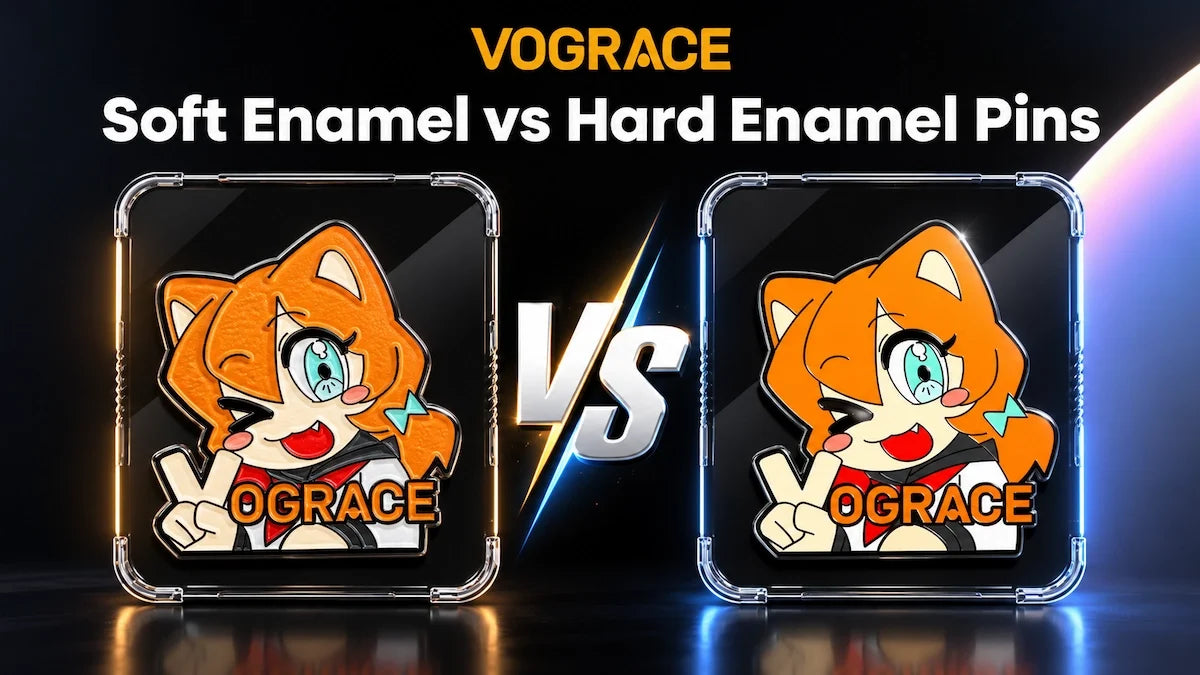
Both can turn the same artwork into a colorful, collectible pin, but they don’t look or feel quite the same. Soft enamel pins have recessed color areas and raised metal lines, while hard enamel pins are filled and polished to create a flatter, smoother surface.
Neither option is automatically better. The right choice depends on your artwork, the finish you want, your budget, and how the pins will be used.
Here’s a closer look at soft enamel vs hard enamel pins and how to choose between them.
Soft Enamel vs Hard Enamel Pins at a Glance
|
Feature |
Soft Enamel Pins |
Hard Enamel Pins |
|
Surface |
Textured, recessed color areas |
Smooth and polished |
|
Metal lines |
Raised above the enamel |
Usually level with the enamel after polishing |
|
Overall look |
Bold, dimensional |
Clean, refined |
|
Feel |
Noticeably textured |
Flat and smooth |
|
Cost |
Often more economical |
Can cost more depending on production |
|
Durability |
Good for everyday merch |
Generally more resistant to surface wear |
|
Best for |
Bold art, merch, collectibles |
Premium merch, polished designs, keepsakes |
|
Design character |
Strong outlines and visible metal |
Sleek, finished appearance |
The biggest difference is easy to notice with your fingertips: soft enamel has texture; hard enamel feels smooth.
What Are Soft Enamel Pins?

Soft enamel pins are one of the most common styles of custom enamel pin.
Despite the name, “soft enamel” does not mean the finished pin itself is soft. The term describes the way the colored areas sit below the surrounding metal lines.
How Soft Enamel Pins Are Made
Production methods vary slightly between manufacturers, but the basic process starts with a metal base shaped according to the artwork.
Raised metal lines define the design and separate different color areas. Color is then applied to the recessed sections and cured.
Because the color does not completely fill the recesses to the height of the metal, the outlines remain raised above the colored areas.
This creates the dimensional surface associated with soft enamel pins.
What Soft Enamel Pins Look and Feel Like
Run your finger over a soft enamel pin and you can usually feel where the metal lines rise above the color.
Soft enamel works especially well with:
· Strong outlines
· Clearly separated colors
· Graphic shapes
· Character art
· Logos
· Symbols and lettering
Gold, silver, black nickel and other plating finishes can become highly visible around the enamel, helping outlines and shapes stand out.
For artists who like a more dimensional finish, this texture is often part of the appeal.
What Are Hard Enamel Pins?

Hard enamel pins use a similar metal-and-color structure, but the finishing process creates a very different surface.
Instead of leaving the colored sections visibly recessed, they are filled closer to the height of the metal and polished.
The result is a smooth, level pin face.
How Hard Enamel Pins Are Made
The exact material and curing process can differ between manufacturers, so “hard enamel” should not be treated as one universal formula.
In general, the colored areas are filled more fully than with soft enamel and go through additional finishing before the surface is polished.
This reduces the height difference between the metal and colored sections.
What Hard Enamel Pins Look and Feel Like
Hard enamel usually feels smoother and more uniform.
Instead of emphasizing depth between the metal lines and color, the finish brings them visually closer together.
It works particularly well for:
· Clean character designs
· Minimal illustrations
· Brand merchandise
· Collector pins
· Anniversary or commemorative designs
The result tends to feel neat, polished and refined.
Soft Enamel vs Hard Enamel Pins: Key Differences
Looking at the finished pin is more useful than focusing only on manufacturing terminology.
Here are the differences that matter most.
Surface and Texture
This is the clearest distinction.
With soft enamel, the colored sections sit below the metal lines, creating visible and tactile depth.
With hard enamel, the surface is polished until the metal and enamel areas are much closer to the same level.
In simple terms:
Soft enamel = texture and depth
Hard enamel = smoothness and polish
Neither effect is inherently higher quality. They simply create different visual styles.
Color and Detail
Both soft and hard enamel can produce strong blocks of color, but traditional enamel works best when colors are separated by metal lines.
Complex gradients, photographic shading and extremely fine details are harder to reproduce using enamel alone.
If your design includes gradients, subtle highlights or photo-like details, another process such as UV printing may be used alongside or instead of standard enamel production.
The key question is not simply which enamel type holds “more detail,” but whether the artwork suits the physical enamel process.
Durability
Both types can make durable merchandise when produced and cared for properly.
Hard enamel generally has an advantage when surface wear is a priority. Its smoother finish leaves fewer recessed edges exposed to direct contact.
Soft enamel is still well suited to everyday pins, bags, display boards and artist merchandise.
Durability also depends on:
· Metal and plating
· Surface treatment
· Storage
· Frequency of wear
· Exposure to moisture or abrasion
So while hard enamel is generally more resistant to surface wear, enamel type alone does not determine a pin’s lifespan.
Cost
Soft enamel is often considered the more economical option because its finishing process is typically simpler.
Hard enamel may require more filling and polishing, which can increase production costs.
However, final pricing also depends on:
· Pin size
· Quantity
· Number of colors
· Plating
· Special effects
· Packaging
· Design complexity
For creators, it is better to compare the actual quote for a specific design than rely on a general rule that hard enamel is always more expensive.
Design Flexibility
Soft enamel makes raised outlines more prominent, which works especially well with anime art, mascots, cartoons and designs built around strong linework.
Hard enamel creates a cleaner visual surface and can suit designs where you want the colors and metal to feel more unified.
The same illustration can therefore feel quite different depending on the finish.
Soft Enamel vs Hard Enamel Pins: Pros and Cons
There is no universal winner, so it helps to look at the trade-offs.
Soft Enamel Pins
Pros
· Distinct raised-and-recessed texture
· Strong separation between colors
· Makes metal outlines stand out
· Often budget-friendly
· Great for bold, graphic artwork
Cons
· Surface is less smooth
· Recessed areas may show wear differently
· Less suitable if you specifically want a polished finish
Hard Enamel Pins
Pros
· Smooth, polished surface
· Clean and refined appearance
· Generally good resistance to everyday surface wear
· Works well for premium merchandise and collectibles
Cons
· Can cost more depending on the design
· Loses the pronounced texture of soft enamel
· The polished look may not suit every illustration style
Most of these “cons” are aesthetic trade-offs rather than true disadvantages.
Which Enamel Pin Type Is Best for Your Design?
Start with the artwork rather than asking which pin type is technically better.
Choose Soft Enamel If…
Soft enamel is worth considering if your design has bold outlines, clear color blocks and strong graphic shapes.
It can also be a good choice when:
· You want visible texture
· Metal lines are part of the artwork
· You’re producing larger merch runs
· You want to keep costs under control
· You’re creating fandom or character merchandise
· You like the traditional enamel pin look
Choose Hard Enamel If…
Hard enamel may be the better fit if you want a smooth, polished finish.
Consider it when:
· You want the pin to feel sleek
· You’re creating premium merchandise
· Your design is clean and structured
· You’re making collector or commemorative pieces
· Surface durability is especially important
· You prefer a flatter appearance
Soft or Hard Enamel for Artist Merch?
For artists and independent creators, the best choice usually comes down to three things: art style, product positioning and budget.
Match the Pin to Your Art Style
Choose soft enamel when your artwork uses:
· Thick outlines
· Bold color blocks
· Cartoon or anime-style characters
· Strong metal borders
· Playful, graphic compositions
Choose hard enamel when your artwork is:
· Clean and minimal
· Designed for a smooth finish
· Part of a premium collection
· More refined or understated in style
Think About the Product You’re Selling
Soft enamel often works well for convention merch, fandom pins and larger product runs where texture adds character.
Hard enamel can be a strong choice for:
· Limited-edition collections
· Collector pins
· Gift sets
· Premium merch
· Branded merchandise
The finish should support how you want the product to feel—not just how the artwork looks on screen.
Keep Cost and Quantity in Mind
If you are testing a new design or producing multiple characters, soft enamel may help keep the project more budget-friendly.
If you are creating a smaller premium collection, paying more for a polished hard enamel finish may make sense.
At Vograce, custom enamel pins can be produced in both soft and hard enamel styles, with different plating options and special effects depending on the design.
Before ordering, check how your linework, colors and special effects will translate into the chosen process.
A good pin starts with artwork designed for the material.
Final Thoughts: Soft Enamel or Hard Enamel?
When comparing soft enamel vs hard enamel pins, the biggest difference is the finish.
Soft enamel gives you raised metal lines and recessed color, creating a textured, dimensional pin.
Hard enamel gives you a smooth, polished surface, creating a cleaner and more refined appearance.
Choose soft enamel when texture, bold outlines and value matter most. Choose hard enamel when you want a smooth finish, polished presentation and greater resistance to surface wear.
Most importantly, choose based on your artwork and the product you want to create.
The best enamel pin is the one that makes your design feel right in the real world.