Trading Card Size Guide: Standard & Custom Dimensions
Choosing the right trading card size is one of the first decisions when creating custom cards. While most collectible card games follow a familiar standard format, custom projects such as indie games, artist merchandise, tarot-inspired decks, and original character cards often require different dimensions to match the artwork and purpose.
There is no single size that works for every card project. The best choice depends on factors such as gameplay requirements, storage compatibility, artwork detail, printing method, and the overall experience you want to create.
This guide covers the most common trading card dimensions, standard TCG sizes, custom card formats, and important printing considerations to help artists, designers, and creators choose the right option.
Standard Trading Card Size: Dimensions at a Glance
Standard Trading Card Dimensions
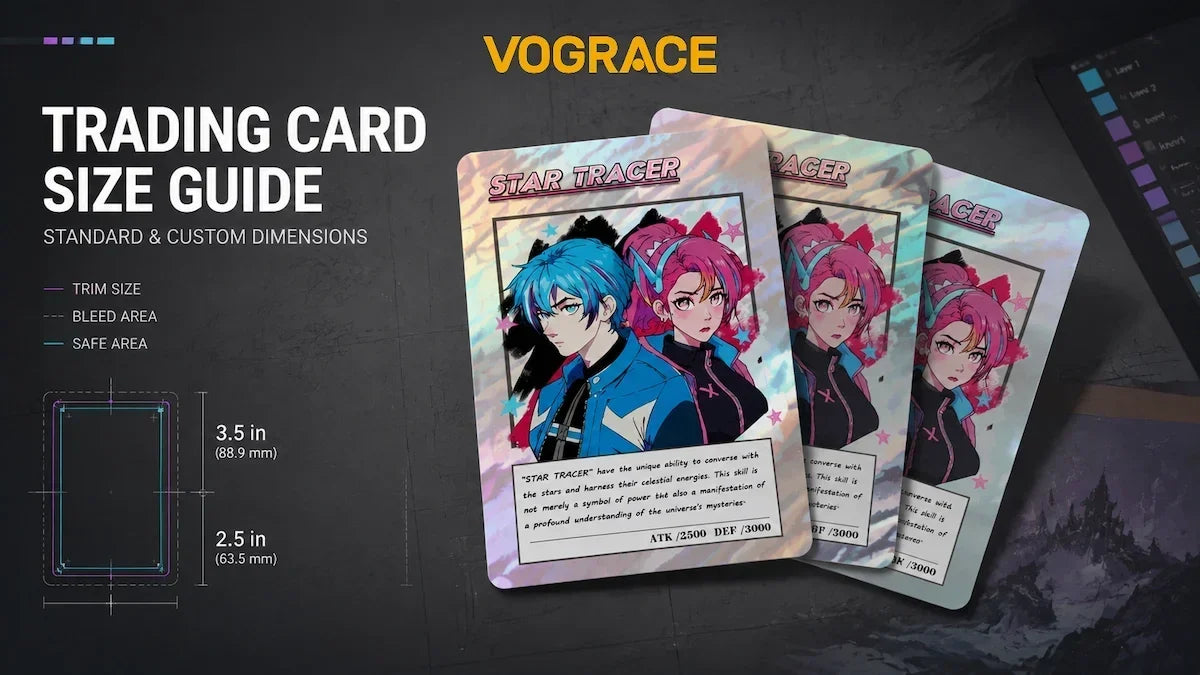
The most widely used standard trading card size is:
|
Measurement |
Size |
|
Inches |
2.5 × 3.5 inches |
|
Millimeters |
63.5 × 88.9 mm |
|
Aspect Ratio |
Approximately 5:7 |
|
Bleed Area |
0.125 inch (3 mm) on each side is commonly recommended |
|
Artwork Size Including Bleed |
Approximately 2.75 × 3.75 inches (69.9 × 95.3 mm) |
|
Safe Area |
Keep important text, logos, and key artwork at least 0.125 inch (3 mm) away from the trim edge |
|
Recommended Resolution |
300 DPI or higher |
When preparing artwork for custom trading cards, the finished card size is only one part of the production process. The bleed area extends beyond the cut line to prevent unwanted white edges, while the safe area protects important design elements from being trimmed.
This size is commonly used for:
· Trading card games (TCG)
· Sports cards
· Collectible cards
· Artist trading cards
· Custom game cards
The popularity of this format is not only because of its appearance. A standard 2.5 × 3.5 inch card is compatible with many existing accessories, including:
· Card sleeves
· Binder pages
· Deck boxes
· Storage cases
For creators designing custom cards, using the standard size often gives buyers a familiar collecting experience.
Trading Card Size Chart: Common Card Formats
Different card types use different dimensions depending on their purpose. Below are some common formats:
|
Card Type |
Dimensions (Inches) |
Dimensions (mm) |
Common Uses |
|
Standard Trading Card |
2.5 × 3.5 in |
63.5 × 88.9 mm |
TCG, sports cards, collectible cards |
|
Japanese TCG Card Size |
2.48 × 3.46 in |
63 × 88 mm |
Some Japanese-style trading card games |
|
Tarot Card Size |
2.75 × 4.75 in |
70 × 120 mm |
Tarot decks, oracle cards |
|
Mini Card Size |
1.75 × 2.5 in |
44.5 × 63.5 mm |
Compact games, mini decks |
|
Square Card |
3.5 × 3.5 in |
89 × 89 mm |
Creative decks, display cards |
|
Oversized Card |
3.5 × 5 in+ |
89 × 127 mm+ |
Promotional cards, collectible displays |
For most custom trading card projects, the standard 2.5 × 3.5 inch format remains the safest choice because it balances artwork space, usability, and compatibility with existing card accessories.
However, creators working on illustration-focused products may benefit from exploring larger or alternative formats.
How to Choose the Right Trading Card Size for Your Project
The best card size depends less on trends and more on what the card needs to achieve.
A competitive game card, an artist collectible, and a premium display card may all require different dimensions.
Choose Standard Size for Collectible and Game Cards
For most custom TCG cards, game cards, and collectible projects, the standard 2.5 × 3.5 inch size is the most practical choice.
Benefits include:
· Familiar handling for players
· Compatibility with standard sleeves and binders
· Easy deck storage
· Professional trading card appearance
If you are creating:
· A fan-made trading card game
· Indie game cards
· Character collectible cards
· Artist trading cards
the standard format is usually the best starting point.
It also allows your audience to treat the cards like traditional collectibles rather than simple printed artwork.
Choose Larger Sizes for Artwork-Focused Cards
Some projects are designed around visual impact rather than gameplay.
A larger card format can work better for:
· Character illustrations
· Tarot-inspired artwork
· Premium collectible cards
· Showcase cards
· Limited-edition releases
Larger dimensions provide more room for:
· Detailed character designs
· Background artwork
· Decorative borders
· Text elements
· Special effects
For example, a character card featuring a full-body illustration may look much stronger on a larger canvas than a standard-sized card where details need to be reduced.
Consider Your Card’s Purpose Before Choosing Dimensions
Before deciding on a size, consider how the card will be used.
|
Project Type |
Recommended Size |
Why |
|
Competitive TCG |
2.5 × 3.5 in |
Standard handling and storage |
|
Collectible character cards |
2.5 × 3.5 in or larger |
Balances artwork and usability |
|
Tarot / oracle decks |
2.75 × 4.75 in |
Better for detailed illustrations |
|
Promotional cards |
Standard or oversized |
Depends on visual impact |
|
Mini games |
Smaller formats |
Easier to carry and handle |
The right size should support the experience you want your audience to have.
Custom Trading Card Printing: Size, Bleed & Design Requirements
Choosing the final dimensions is only one part of creating professional-quality cards. Artwork preparation also plays an important role.
Understand Trim Size, Bleed Area & Safe Zone

When preparing artwork for custom card printing, three areas are important:
|
Term |
Meaning |
|
Trim Size |
The final finished size of the card after cutting |
|
Bleed Area |
Extra artwork extending beyond the cut line to prevent white edges |
|
Safe Zone |
The inner area where important text and artwork should stay |
For a standard trading card:
Finished size:
· 2.5 × 3.5 inches
Your artwork usually needs additional bleed beyond the final card edge.
A common printing setup includes:
· Finished card size: 2.5 × 3.5 inches
· Bleed: around 0.125 inch on each side (varies by printer)
· Important text/logos kept inside the safe area
Always check the specific printing requirements of your card manufacturer before submitting files.
Recommended File Setup for Custom Trading Cards
For clear and professional printing results, creators should prepare artwork with suitable technical settings.
Recommended setup:
|
Item |
Recommendation |
|
Resolution |
300 DPI or higher |
|
Color Mode |
CMYK preferred for print workflows |
|
File Formats |
PNG, PDF, PSD, AI |
|
Artwork Quality |
High-resolution original files |
|
Background |
Include bleed if required |
High resolution is especially important for cards with:
· Small text
· Fine illustrations
· Detailed linework
· Complex patterns
A design that looks sharp on screen may lose important details when printed at physical card size.
Design Tips for Better Looking Cards
Good card design is not only about fitting artwork into the correct dimensions.
Consider these practical tips:
Keep important details readable
Avoid making:
· Tiny text
· Thin lines
· Small symbols
too close to the card edge.
Design at the final physical size
Always preview your artwork at actual size. A design that looks perfect when zoomed in may feel crowded when printed.
Think about front and back design together
For collectible cards, the back design is part of the overall experience.
A consistent card back can make a deck feel more professional and collectible.
Leave room for finishing effects
If you plan to use:
· Holographic effects
· Foil finishes
· Special coatings
consider how those effects interact with your artwork.
Custom Trading Card Size Tips for Artists and Creators
For artists and creators, card dimensions are not only technical specifications—they influence how people experience the artwork.
When creating custom cards for:
· Artist merchandise
· Original characters (OCs)
· Indie games
· Fan communities
· Collector products
the standard 2.5 × 3.5 inch format is often a great foundation because people immediately recognize the format.
However, unique projects may benefit from experimenting with different sizes.
A larger card can create a premium collectible feeling, while a standard size can make the product easier to store, trade, and collect.
Before finalizing your design, consider:
· Who will use the cards?
· Will they be collected or played?
· Does the artwork need extra space?
· Do customers expect standard sleeves or storage options?
The best custom cards are not just printed images—they are physical products designed for a specific experience.
Choosing the right trading card size is about balancing design, usability, and production requirements. Whether you are creating a playable card game, an artist collectible, or a custom merchandise project, the best size is the one that allows your artwork and ideas to be experienced the way you intended.
FAQs
What is the standard trading card size?
The standard trading card size is 2.5 × 3.5 inches (63.5 × 88.9 mm). This format is commonly used for TCG cards, sports cards, and collectible cards.
What size are Pokémon and other TCG cards?
Most traditional TCG cards use the standard size of approximately 2.5 × 3.5 inches. Some Japanese card formats are slightly smaller, around 63 × 88 mm.
What are the dimensions of a custom trading card?
Custom trading cards can use standard dimensions or unique sizes depending on the project. The most common custom format is still 2.5 × 3.5 inches.
What size should I use for custom TCG cards?
For custom TCG projects, 2.5 × 3.5 inches is usually recommended because it works with standard sleeves, binders, and deck accessories.
What resolution should trading card artwork be?
For professional printing, artwork should generally be prepared at 300 DPI or higher. Higher resolution helps preserve fine details and text clarity.
Can custom trading cards be different sizes?
Yes. Custom cards can be made in various dimensions depending on the purpose. Larger formats are often used for premium collectibles, tarot-style cards, or artwork-focused products.